Why Sydney Tutoring Centres Lose Enquiries
Parents message Sydney tutoring centres at 7pm when every tutor is teaching. Here is how AI automation answers, books and follows up before they try.
A parent decides at 7:30pm on a Tuesday that her son needs help with Year 9 maths. She messages three tutoring centres in her area. The one that replies that night, with a real answer about times, prices and an assessment booking, is usually the one that wins the family. The other two are still teaching a class and see the message tomorrow.
If you run a tutoring centre in Sydney, you know the problem. Your enquiry peak is exactly when your staff peak: weekday afternoons and evenings, while every tutor is in a room with students. Nobody can pick up the phone mid-lesson.
Short answer: Most tutoring centres lose enquiries to response time, not price. An AI automation answers new enquiries within a minute, day or night, collects the student's year level and subject, books an assessment into your calendar, and writes it all into the system you already use. Tutors stay focused on teaching; a person handles anything the AI is unsure about. A typical build takes two to four weeks at a fixed price.
Where the enquiries actually leak out
The manual workflow at a small centre looks something like this: enquiries land in three places (the website form, Instagram DMs and the mobile phone), whoever finishes their lesson first scrolls back through them, and a part-time admin tries to ring everyone back the next morning.
Three things go wrong, and each one costs you a family:
- The reply arrives too late. Parents shopping for tutoring usually shortlist three or four centres and go with whoever engages first. A reply 18 hours later is a reply to a decision already made.
- The first conversation is incomplete. Even when someone does ring back, they get the child's name and nothing else, then spend the assessment slot asking basics. Some families never book at all because the first contact felt like a sales call instead of an answer.
- Nobody follows up. A family that enquired in term three and "said they'd think about it" is never contacted again. There is no list, no reminder, no second touch.
Add the quieter leak behind the counter: re-enrolments. Every term break, someone calls or texts every current family to confirm they are continuing. For a centre with 150 students, that is days of unbillable admin work, and the families who miss the call silently drop off the roll.
What an automated workflow does instead
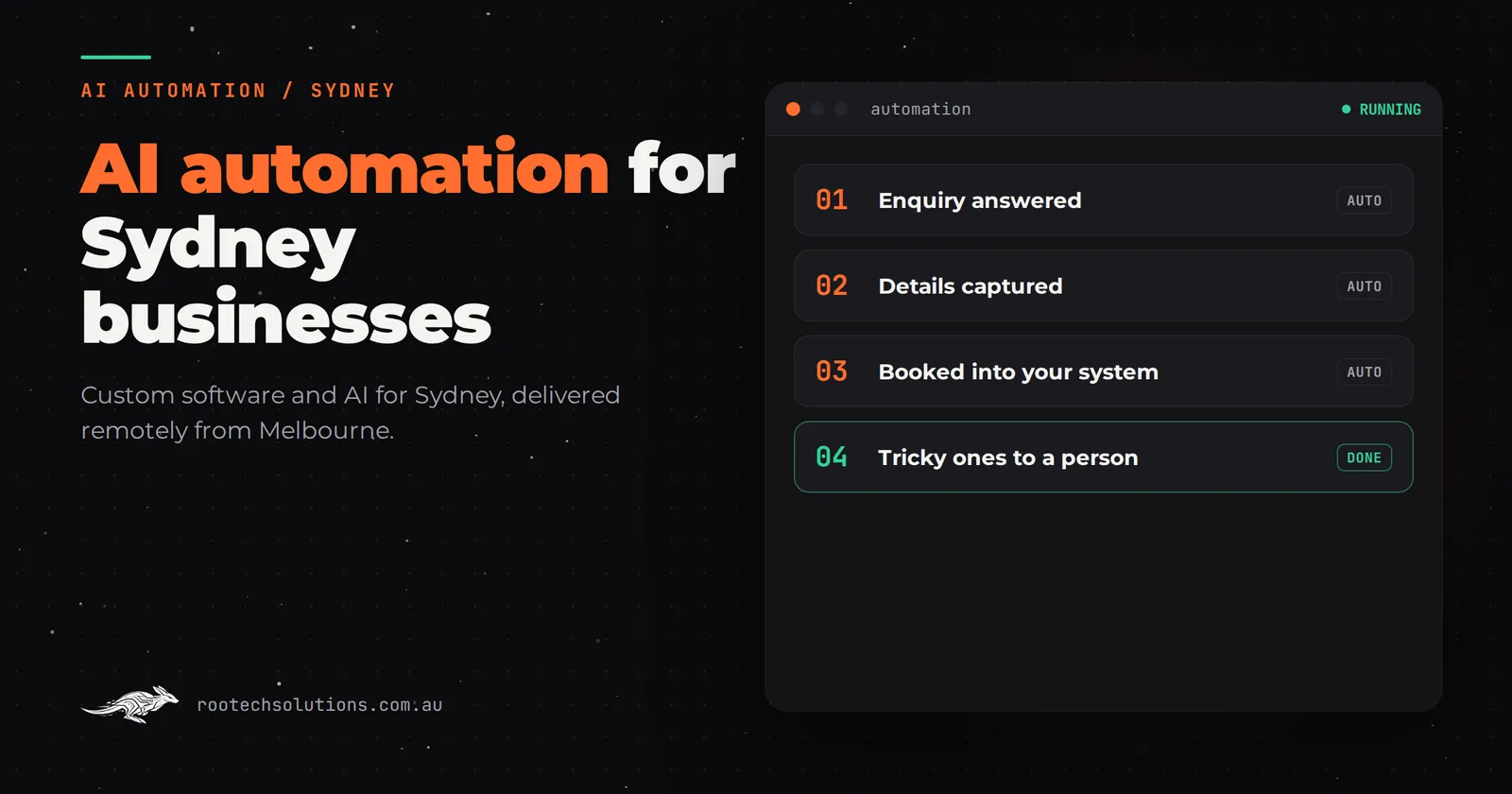
The automation sits in front of the channels parents already use and does the first five minutes of work for you:
- Answers within a minute, any hour. A parent messages your website, Facebook page or SMS line at 7:30pm and gets an immediate, useful reply: what year levels you cover, your fees, your availability, where you are. It answers only from information you have approved, and it never invents a price or a promise.
- Collects the details that matter. Year level, subject, school, what the parent is worried about, whether they want one-on-one or small group. This arrives with you structured, not scattered across a text thread.
- Books the assessment itself. It offers real gaps from your calendar and puts the booking straight into it, then sends the confirmation and reminder.
- Escalates the judgement calls. A parent asking "can you help with selective school preparation, and do you have anyone who has done it?" is a human question. The AI hands it to you with the details attached, rather than guessing.
- Runs re-enrolment for you. At term break it messages every current family, records who is continuing, flags who did not reply, and nudges the non-repliers twice. Your team only talks to the families that need a real conversation.
Everything is written into the tools you already run, such as your booking calendar, your spreadsheet or roll, and Google Workspace. Nobody re-types anything.
Where the person stays in the loop
This is the part worried owners ask about first, and it matters. The AI never decides anything with money or a commitment attached. It does not quote custom rates, it does not promise a particular tutor, and it does not discuss a child's learning needs. It confirms facts, collects information and books slots. Anything uncertain, emotional or commercial goes to a human with a tidy summary. The goal is not to remove your admin person; it is to stop them spending their whole day on questions a parent could have had answered at 9pm.
The after-hours piece is the same problem other service businesses face: clinics catch after-hours bookings this way, as we wrote in how clinics catch after-hours bookings with AI, and the underlying reason replies matter so much is covered in why slow follow-up loses leads.
Off-the-shelf tools versus a custom layer
You may already run tutoring software, or a generic booking tool. Keep it. The question is not "which platform" but "who answers the message at 7:30pm and who chases the re-enrolment list".
Off-the-shelf products do the calendar and the payments well. What they generally do not do is hold a natural conversation across your website, Instagram and SMS, answer from your specific fee structure and tutoring programs, book into your calendar, and then run a re-enrolment campaign against your own roll of families. That gap is where a custom layer earns its keep: it is built around how your centre actually works, and it plugs into whatever you already use rather than asking you to migrate.
We have built in this space before: for Sprout Lessons we built an AI lesson generation platform and the site around it, so education workflows with AI behind them are familiar ground. You can see that work at /work/sprout-lessons.
The payoff, in rough numbers
Say a Sydney centre gets 40 new enquiries a month, mostly in the evening peak, and currently converts 12 of them to enrolled students (30 percent). The leaks are response time and incomplete follow-up.
With automation answering in under a minute and no enquiry left untouched:
| What changes | Manual today | With automation |
|---|---|---|
| First reply time | 2 to 18 hours | Under a minute |
| Enquiries converted per month | 12 of 40 | 15 to 18 (estimates) |
| Re-enrolment chasing per term | 2 to 3 admin days | A few hours of review |
| Enquiries missed entirely | The after-hours ones | None unanswered |
At $60 a week per student, five extra enrolments a month is $1,300 in new recurring monthly revenue once those students settle in, which is an estimate based on your own numbers, not a promise. The AI usage cost for a centre of this size typically lands between $20 and $200 a month, and hosting is usually under $50 a month. Run the table with your own figures before you believe any of it, including ours.
What it takes to build
A workflow like this is a two to four week build at a fixed price agreed before we start. Discovery happens over a call, the build is done in the cloud, and we set it up with your team remotely. Rootech is a Melbourne studio working Australia-wide, so Sydney centres get the same process as everyone else: video for discovery and reviews, and a system handed over with your team trained on it. You can read more about our work for Sydney businesses on the custom software Sydney page.
You own the code and the accounts it runs on, bug fixes on what we build are included after launch, and an optional monthly retainer covers monitoring and improvements.
The takeaway
Tutoring is a responsive business: the family that hears back first books first. You cannot answer messages mid-lesson, and you should not have to. Let the automation hold the first conversation, book the assessment, and chase the term-break re-enrolments, while you and your tutors do the work only humans can do.
If you want to see what this would look like for your centre, book a free call with Rootech for a free AI workflow audit. The audit fee comes off your first project.
Frequently asked questions
Will parents know they are talking to an AI?
They should. Most parents messaging at 9pm care about getting a fast, accurate answer, not about whether a person typed it. The message is answered from your approved information, and anything it cannot handle goes straight to your team. Hiding it would defeat the point: the honesty is part of why it works.
We use a booking app already. Does this replace it?
No. The automation sits in front of it. It handles the conversation and the data collection, then writes bookings into the calendar and records into the tools you already run. If your current software is doing its job, keep it; we build the layer it is missing.
What happens if the AI gets something wrong?
It is constrained to approved information and it escalates when unsure, so the common failure is "I will have someone from the centre get back to you", not a made-up answer. Anything involving fees, guarantees or a child's specific needs goes to a human.
Does this work for one-on-one tutors, not just centres?
Yes, though the payoff is different. A solo tutor's biggest win is usually the after-hours enquiry capture and the re-enrolment nudges, because there is nobody else to do them. The same build covers both, scaled down.
How quickly can we go live?
Most builds like this ship in two to four weeks. Discovery and setup happen over video calls, and the system goes live once your team has walked through it with us.