No Technical Co-Founder? Melbourne Founders, Read This
Non-technical founder in Melbourne or anywhere in Australia looking for a technical partner? Compare a co-founder, a freelancer and a part-time engineering team.
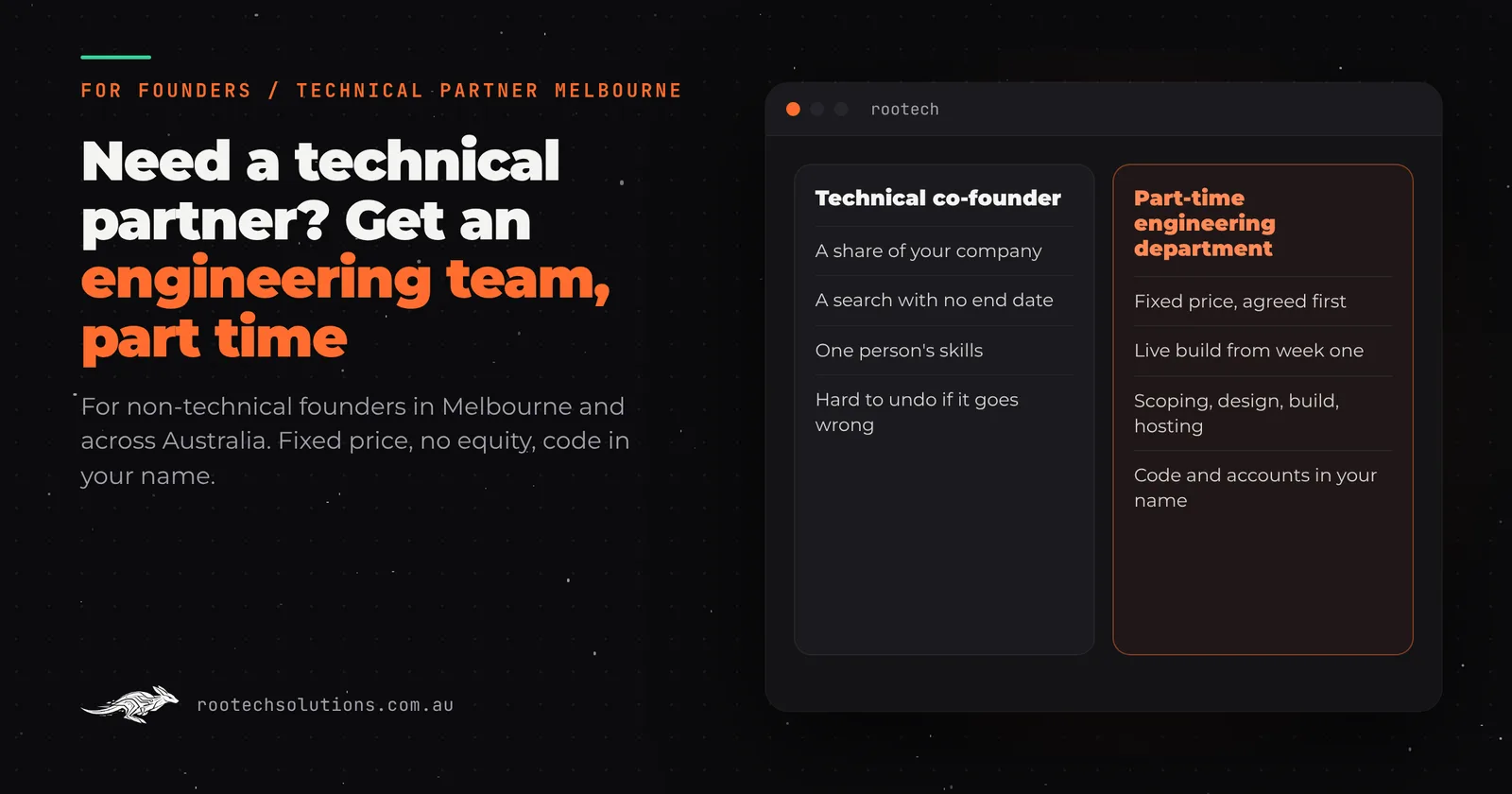
You have the idea, and you have been living with it for months. You know the customer because you were the customer. Maybe you have a Figma file, a spreadsheet that runs half the business, or an app you prompted together in Lovable over a long weekend. What you do not have is anyone to build the real thing.
So you search for a technical co-founder. You go to the meetups, post in the founder groups, take coffees in Richmond and Collingwood with developers who are polite and already busy. Every startup guide says the same thing: find a technical partner first.
This post is for that founder: solo, non-technical, in Melbourne or anywhere in Australia, with a product that needs to get to market. It is also, openly, a case for a different answer. Most first products do not need a co-founder who writes code. They need an engineering department, and they need it part time.
Short answer: A technical co-founder is the right call when the technology itself is the product, or when you can find the right person and are happy to share ownership of the company. For most non-technical founders, what they actually need is the work a technical partner does: scoping version one, design, building it, hosting, security and keeping it running. Rootech is a Melbourne software studio that does that as a part-time engineering department: a fixed price agreed in writing before each stage, a live build you can click from the first week, code and accounts in your name, and an optional month-to-month retainer after launch. No equity, no lock-in.
What you are really looking for when you look for a technical co-founder
Strip the title away and a technical co-founder is someone who does five jobs:
- Decides what to build first. Turns your idea into a version one that is small enough to ship and good enough to charge for.
- Builds it. Screens, accounts, payments, the database, the admin area, and increasingly some AI.
- Keeps it running. Hosting, backups, security updates, and answering the phone when it breaks.
- Tells you the truth. Whether a feature is a week or a quarter, and whether it is worth either.
- Owns it with you. Cares about it as much as you do, because they own part of it.
The first four are engineering jobs. Only the fifth needs a co-founder. And the fifth comes with the biggest price tag: a share of the company you are building.
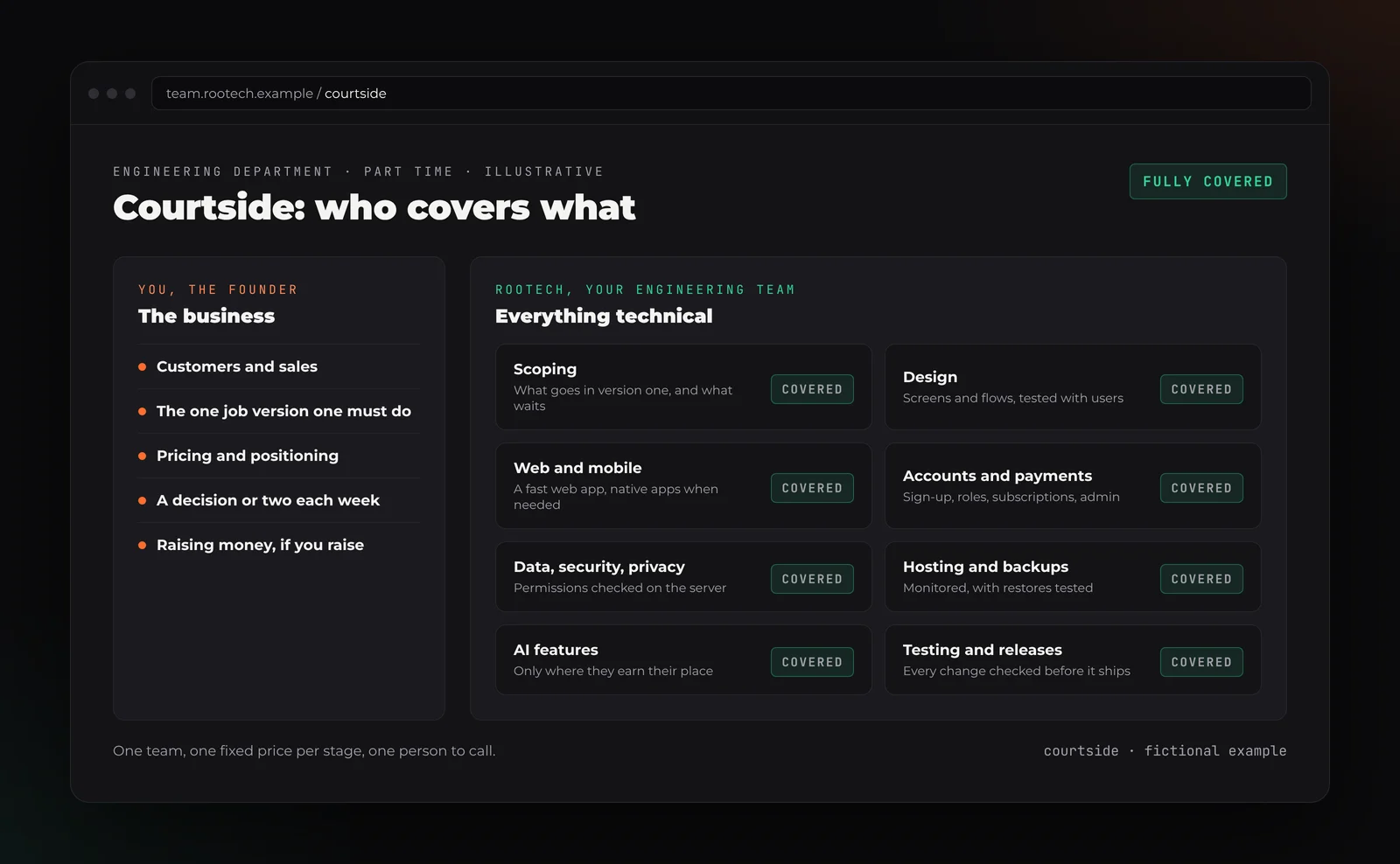
Caption: Illustrative, for a fictional app. You keep the business; the engineering department covers every technical seat a first product needs.
That picture is the whole argument. A first product does not need one brilliant generalist. It needs a scoper, a designer, a web developer, someone who understands payments and permissions, someone who looks after hosting and backups, and someone who knows when AI helps and when it is a gimmick. It is rare to find all of that in one person who is also willing to work for equity.
The four ways non-technical founders get a product built
Here is the honest landscape, without the sales pitch first.
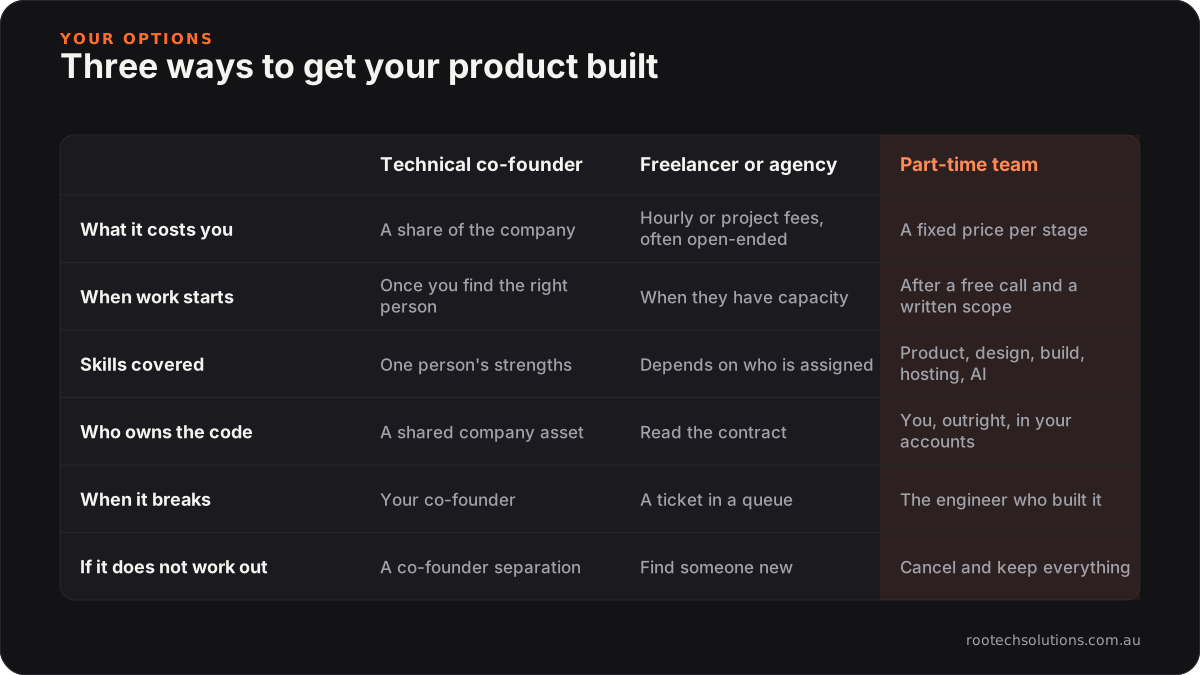
A technical co-founder. The classic answer. When it works, it is wonderful: a partner who is all in. The costs are real, though. You give away a meaningful share of the company, and you should only do it with a written founders' agreement and vesting, so equity follows contribution. The search has no end date, and a co-founder you chose because they were available rather than right is one of the most expensive mistakes a founder can make. A co-founder separation is far harder to undo than a supplier you stop paying.
A freelancer. Good for well-defined pieces of work. The risk is coverage: one person is rarely strong at design, back end, security and hosting all at once, and when they take a full-time job or a bigger client, your product waits. Ask who owns the code and the accounts before you start.
A traditional agency or an offshore team. Agencies often bill hourly or on a retainer that grows, and start with long discovery phases. Offshore teams can be cheaper per hour, but the quality depends on how precisely you can write a brief, which is the exact skill a non-technical founder is short on. In both cases, read the contract closely for ownership and hosting.
A fractional CTO. A senior technical person, part time. Useful for advice, hiring and reviewing other people's work. But a fractional CTO usually advises rather than builds, so you still need someone to write the code.
And then there is the option this post is arguing for.
A part-time engineering department. A small senior team that acts as your technical partner: it scopes, designs, builds, hosts and maintains the product, at a fixed price per stage and without taking equity. That is how Rootech works with founders.
When a technical co-founder is the right answer
We would rather you trust this post than agree with it, so here is when we would tell you to keep looking for a co-founder:
- The technology is the product. New research, a novel algorithm, hardware, anything where the hard part is invention rather than building well. You want the inventor inside the company.
- You are raising from investors who expect one. Some investors want a technical founder on the cap table. If that is your path, it matters.
- You have already found the person. If someone you trust, who has built and shipped before, wants in, and you have agreed in writing how it works, that is worth more than any supplier.
For everyone else, there is a better order of operations: build version one with an engineering team, get it in front of customers, and bring in technical leadership later, once there is a product, users and revenue to recruit around. A good CTO candidate takes a working product with paying customers far more seriously than a pitch deck. And because you own all of the code, they start from a running system, not a rewrite.
What a part-time engineering department looks like week to week
Founders worry, reasonably, that outsourcing means disappearing into a black box for three months and getting something back that is not what they meant. The fix is not a co-founder. It is visibility.
From the first week you get a live link to the product as it is being built. You click it on your phone, show it to customers, and send feedback while it still costs nothing to change. Each week ends with a short demo: what shipped, what is in progress, and the decisions only you can make.
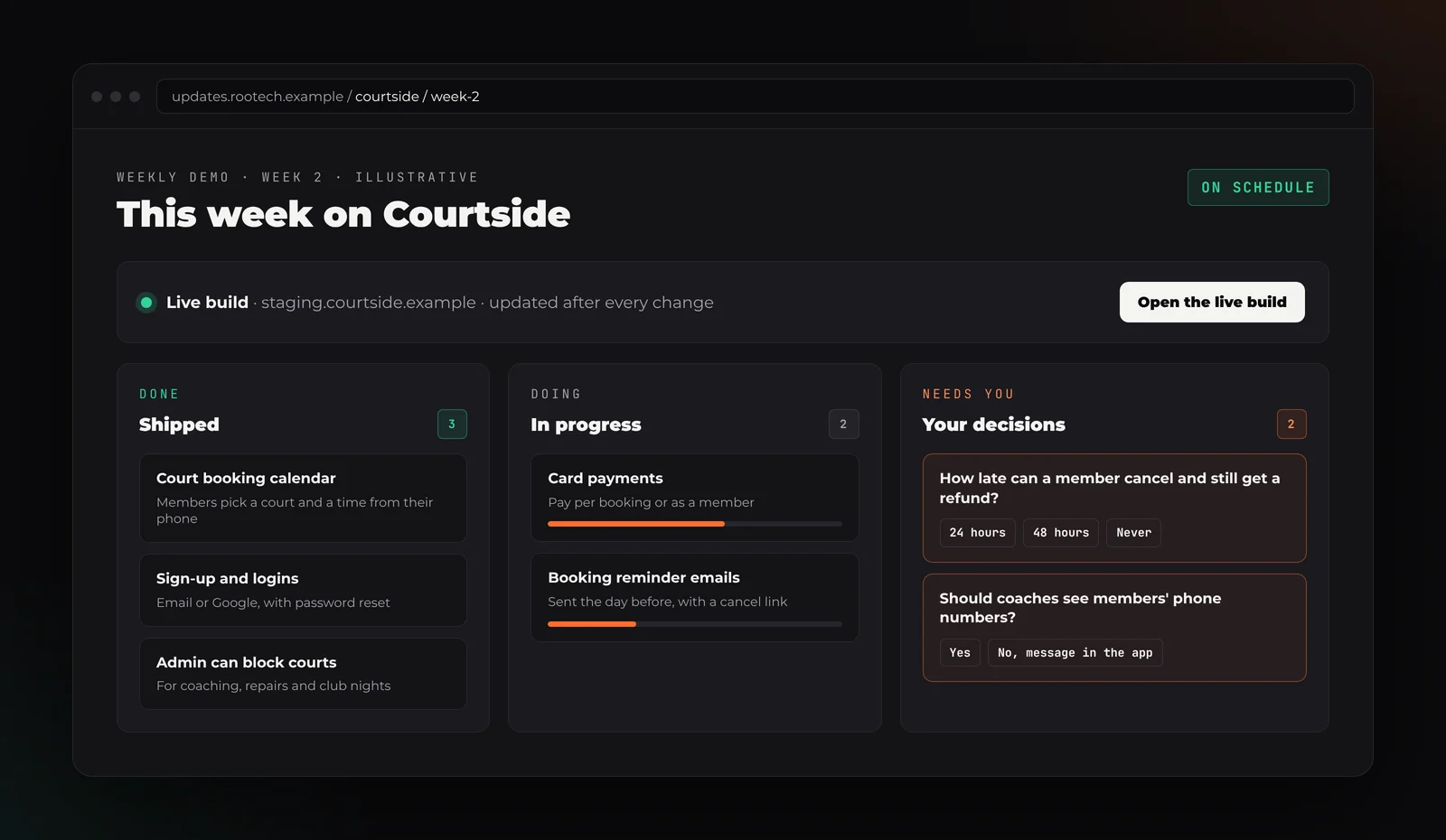
Caption: Illustrative. The engineering is handled; the questions that are really business questions come to you, with the options laid out.
Notice what lands in the "your decisions" column. Refund windows and who can see whose phone number are not technical questions. They are business and privacy decisions, and they belong to the founder. A good technical partner surfaces them early and makes them easy to answer. A bad one makes them silently, and you find out from a customer.
The whole engagement runs in five steps:
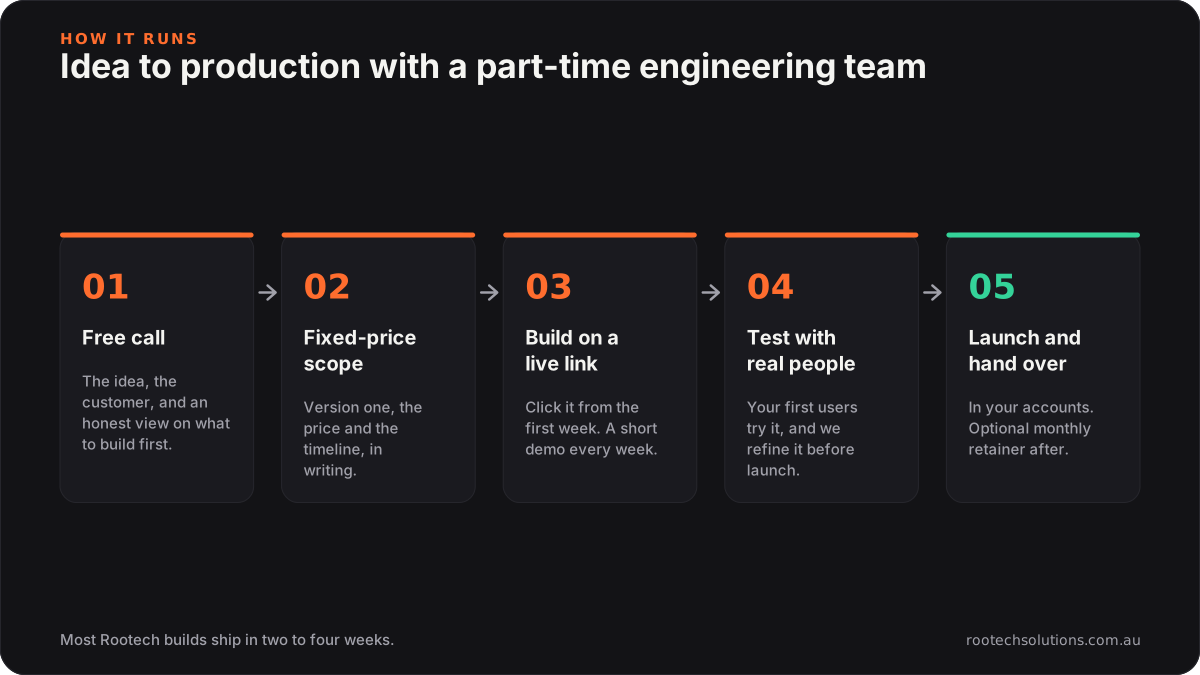
1. A free call. You explain the idea and the customer. We tell you honestly what we would build first, and whether we are the right people. If the right first step is talking to more customers rather than writing code, we will say so.
2. A fixed-price scope. The scope of version one, the price and the timeline, in writing. No build work starts until you have agreed the number.
3. Build on a live link. You watch it grow and steer as you go, not at the end.
4. Test with real people. Your first users try it before launch, and we refine it based on what they actually do.
5. Launch and hand over. It goes live in your accounts, with the code, documentation and credentials handed over. Ongoing work after that is optional.
Version one: what goes in, what waits, and the price before you sign
The fastest way to market is a smaller first version. Most founders arrive with a list of twenty features; the product that launches does one job well. Scoping is where an engineering partner earns their keep, because cutting scope is the single biggest lever on cost and time.
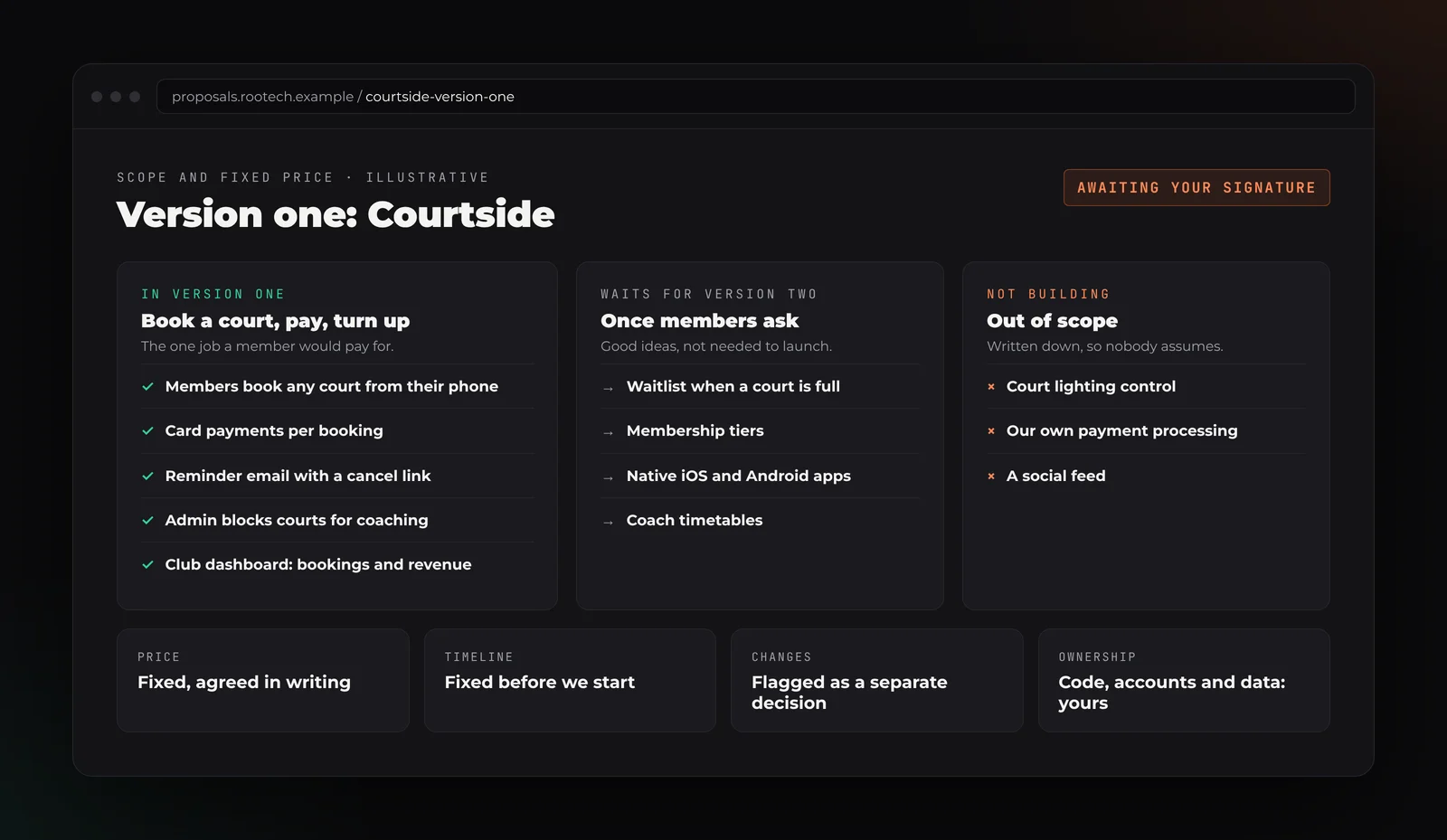
Caption: Illustrative. "Not building" is written down too, so nobody assumes, and every change after signing is its own decision with its own price.
Every Rootech project is fixed price. Small changes along the way are absorbed; anything bigger is flagged as a separate decision, never slipped onto an invoice. Most builds ship in two to four weeks, and a bigger platform gets a fixed timeline up front, so you can plan a launch, a pitch or a grant application around a real date.
If you want to go deeper on scoping, read what to put in version one of your app. On why the price should be fixed rather than hourly, see fixed price versus hourly for software and AI work.
What a real product looks like when it reaches production
Talk is cheap, so here are two products we have taken from a brief to live software. These are client projects, described only with what is on each case file.
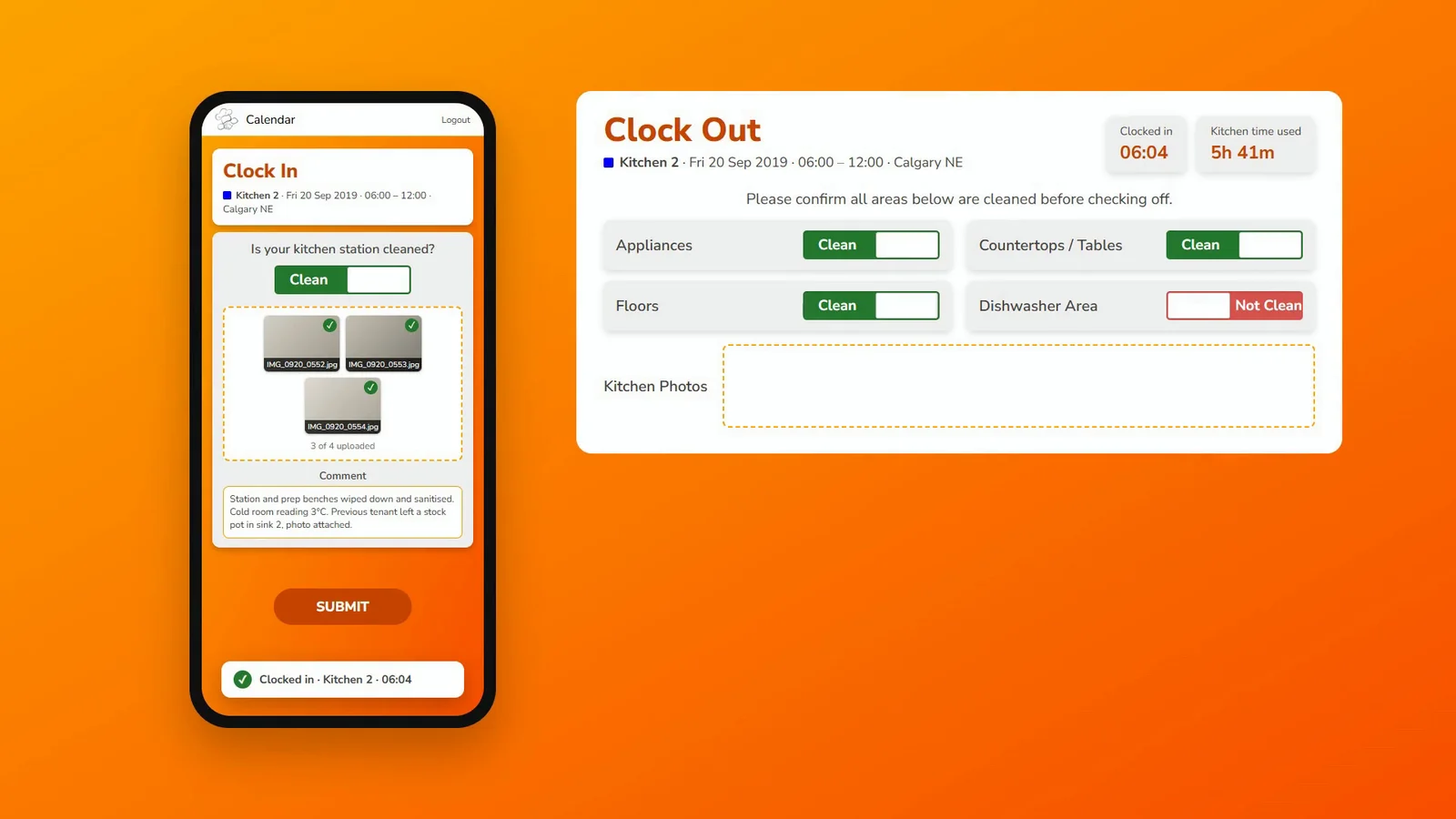
Caption: Kaladi Kitchens. A multi-location booking platform and website for a commercial kitchen collective. Members book any kitchen, at any location, from their phone, and every session opens and closes with a photo-backed checklist.
Kaladi is a good example of a product that is not just screens. Bookings across several locations, roles for members and admins, photo uploads on every shift: that is the kind of foundation a first product needs to carry real users.
Logic Building Co is the other end of the scale: an agentic AI estimator that performs takeoffs on prospective construction jobs, turning plans into measured quantities and a costed estimate, with a person reviewing it before it goes anywhere. Logic reports that a takeoff on a multi-unit or multi-floor job used to take about a week, and with the AI estimator it takes about ten minutes. That is what a focused version one looks like: one expensive job, done well, with a human still in the loop where money is involved. The full story is in AI takeoff software for estimators.
The question that matters most: who owns it?
The fear behind "I need a technical co-founder" is often really a fear of dependence. If the developer disappears, does the product disappear with them?
It should not. Every Rootech build ends with everything in your name: the code repository, the domain, the hosting, the database and its backups, the payment account, the documentation and the credentials. If you later hire a CTO, raise money, or move to another studio, they start from a clean handover, not an archaeology dig.
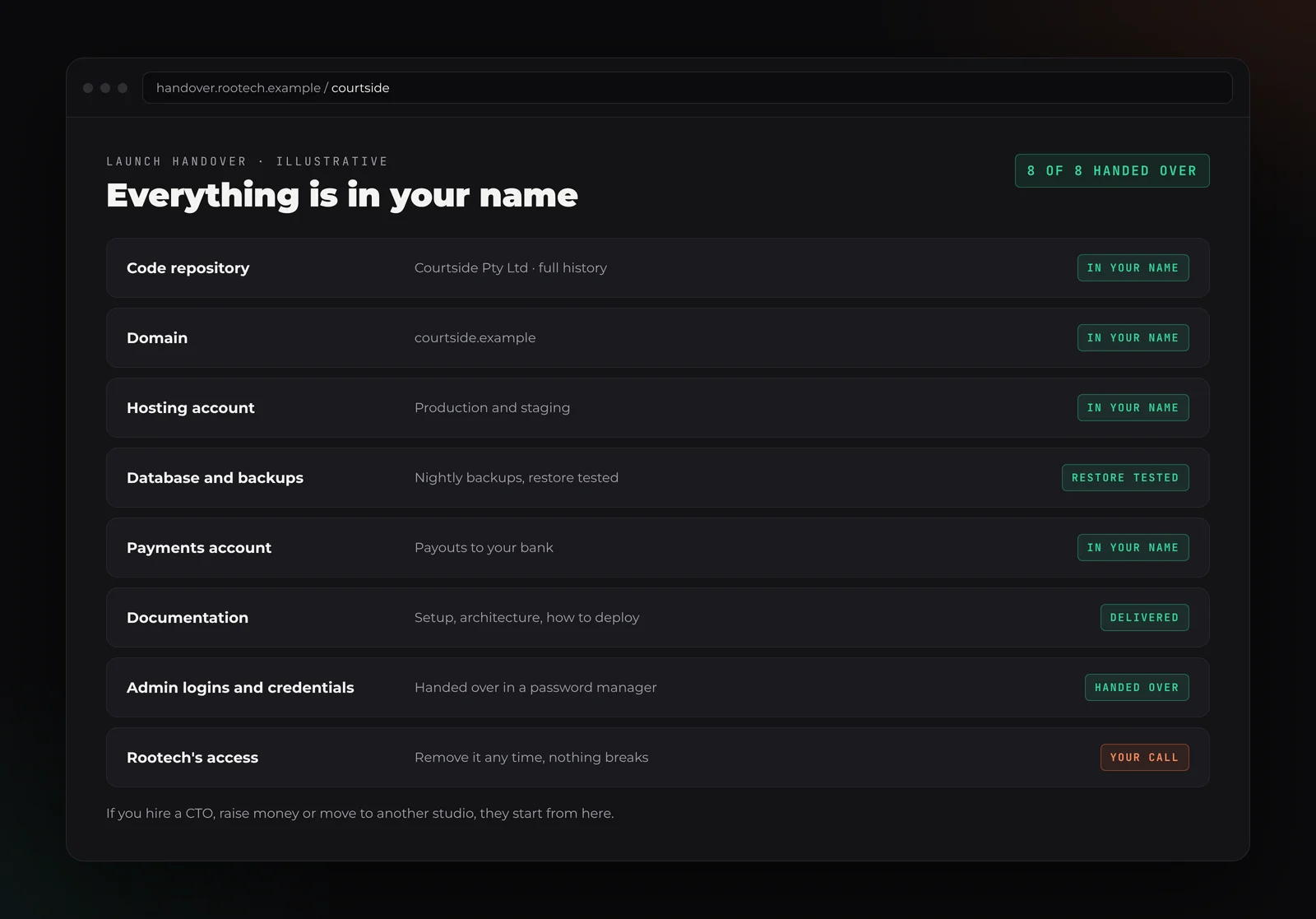
Caption: Illustrative. The last line matters most: you can remove our access at any time and nothing breaks.
That is something a co-founder arrangement cannot offer as cleanly. If a co-founder leaves, they may leave with equity, and untangling that is a legal job. If a supplier stops being useful, you stop paying them and keep everything. For a deeper look at the contract side, read who owns the code when you pay a developer.
After launch: the engineering department stays, if you want it to
A product is never finished, and this is where the "part time" part earns its name. After launch, an optional monthly retainer keeps the engineering department on: monitoring, security updates, backups and a steady stream of improvements in the order you choose.
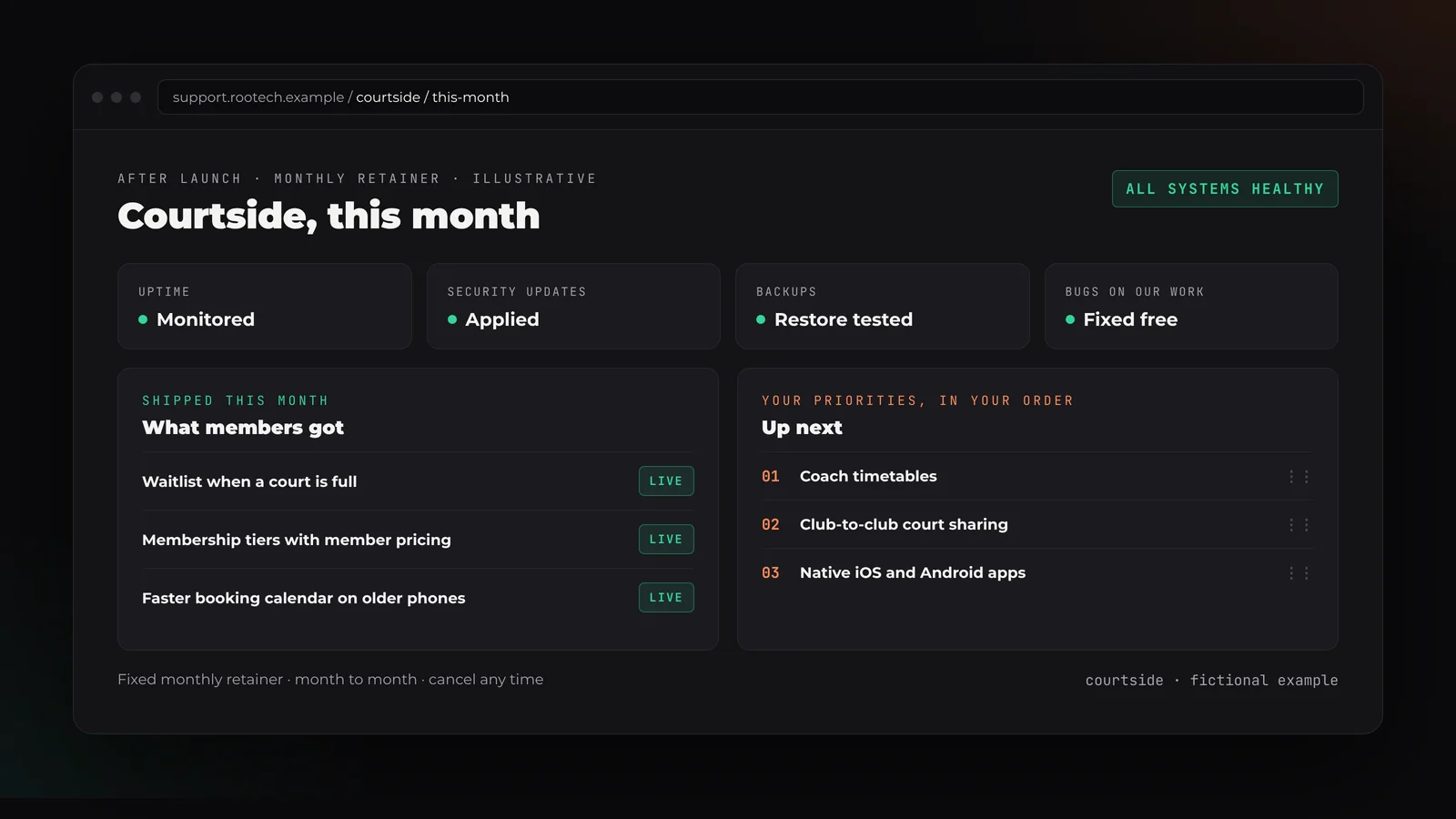
Caption: Illustrative. You set the order of the list; we keep the lights on and ship from the top.
Bug fixes on anything we built are included after launch at no cost. The retainer is a fixed monthly amount sized to your product, month to month, and you can cancel any time. More on how that works is on our software maintenance page.
Compare that with a co-founder on the payroll or a full-time hire: a part-time engineering department scales with what the product needs this month, not with a salary you have committed to before you have revenue to cover it.
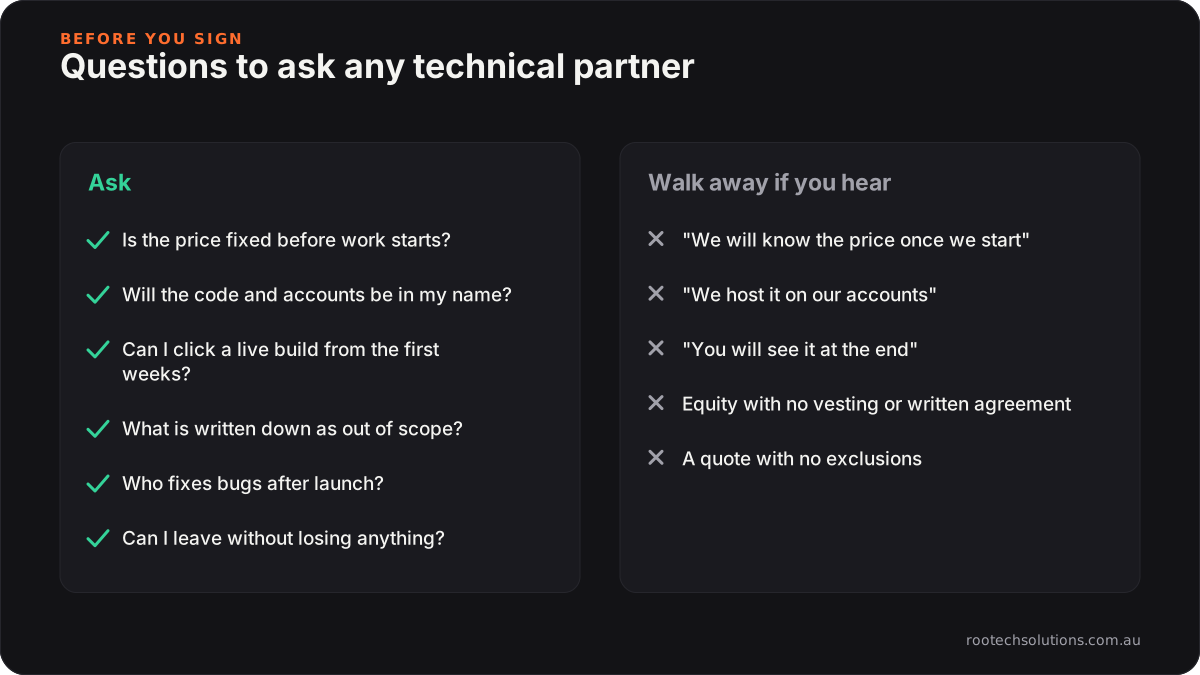
Questions to ask any technical partner, including us
Whoever you choose, ask these before you sign anything. The answers tell you most of what you need to know.
Melbourne founders, and founders everywhere else
Melbourne has a deep pool of people building their first product: hospitality owners, tradies, allied health practitioners, teachers, designers and students turning a side project into a business. Victoria even has a government agency, LaunchVic, whose whole job is backing the state's startup ecosystem.
Rootech is based in Melbourne, so Melbourne founders can do the discovery session, the scoping and the handover in person if they prefer, at a table with a laptop and a coffee. Most of the build still happens in the cloud, with weekly demos in person or over video, whichever suits you.
Outside Melbourne the work runs remotely by default: the call and scoping over video, the build in the cloud, and demos at times that suit your time zone. Sydney, Canberra and Hobart share our hours; Brisbane matches us outside daylight saving; Adelaide is thirty minutes behind; Perth is two to three hours behind. Our city pages cover Melbourne, Sydney, Brisbane, Perth, Adelaide and Hobart.
Already built something yourself with an AI builder? You are not starting from zero. Your prototype becomes the specification, and a vibe code cleanup keeps the screens your users know while the foundation is rebuilt for real customers.
What it costs
Each stage is a fixed price agreed in writing before work starts, based on the scope of that version, because the honest price depends on what the product has to do. If a smaller version would get you to customers faster, we will say so. Once the product is live, running costs are usually small: hosting under $50 a month, and AI usage typically $20 to $200 a month depending on volume.
Every project comes with the same promises:
- A fixed price before you sign. Scope and price agreed in writing up front.
- Bug fixes included after launch. If something we built does not work the way we agreed, we fix it at no cost.
- You own all of it. The code, the domain, the hosting accounts and the data, in your name.
- A proper handover. Code, documentation, credentials and a walkthrough.
- No lock-in. Ongoing support is optional, month to month, and you can cancel any time.
See the full offer on our product development page.
Frequently asked questions
Do I need a technical co-founder to start a tech company in Australia?
Not to build and launch a first version. You need someone who owns the engineering and tells you the truth about it. Many founders bring in technical leadership later, once there is a product and revenue to hire around. A technical co-founder makes most sense when the technology itself is the invention, or when your investors expect one.
How do I find a technical co-founder in Melbourne?
Founder meetups, startup programs, university networks and your own industry are the usual places. Whoever you meet, look for someone who has shipped products before, and put a written founders' agreement with vesting in place before you split equity. While you search, you do not have to wait: a version one built by an engineering team gives a future co-founder a working product to join.
What is a part-time engineering department?
A small team that does the work of a technical partner without joining the company: scoping, design, building, hosting, security and maintenance. With Rootech, each stage is a fixed price agreed in writing, you get a live build from the first week, and everything is in your name. After launch it continues on an optional monthly retainer you can cancel any time.
Is this the same as a fractional CTO?
Not quite. A fractional CTO is usually a senior advisor who helps with decisions and hiring. A part-time engineering department advises and also builds and runs the product. If you already have a fractional CTO, we are happy to work alongside them.
Do you take equity instead of payment?
No. Every project is a fixed price, so you keep all of your company. That also means there is nothing to unwind if you later hire a CTO or move the product to another team.
How long does it take to get a product to market?
Most Rootech builds ship in two to four weeks. A bigger platform gets a fixed timeline agreed before work starts. The fastest route is almost always a smaller version one, which is what scoping is for.
Can I meet you in person?
Yes, if you are in Melbourne. Founders here can do the discovery session, scoping and handover in person. Founders elsewhere in Australia work with us over video, with the same process and the same result.
What happens if I want to take the product in-house later?
You already own the code, the accounts and the data, and you get documentation and credentials at handover. Your new team starts from a running product. We can help with the transition, or step back entirely.
Tell us what you want to build
If you have the idea and the customer but not the engineering, you do not have to give away part of your company to get started. Tell us what you want to build and who it is for, and we will come back with an honest view on version one and a fixed price. In Melbourne, we are happy to do it over a coffee. Start through the contact form at Rootech Solutions.